The Speke Brothers: Edward
Little is known of Edward, unlike his brothers. John Hanning Speke, exploring the source of the Nile. Then, there was brother Benjamin, instrumental in rebuilding our church in 1862. However, a contribution from a keen researcher highlights Edward's remarkable conduct on the battlefield, and the recapture of Delhi from the Mutineers during the Indian Mutiny of 1857/9.
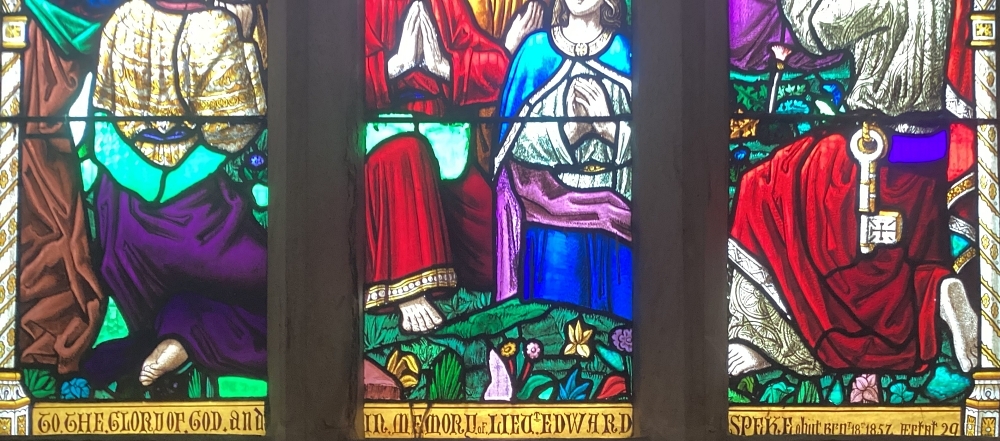
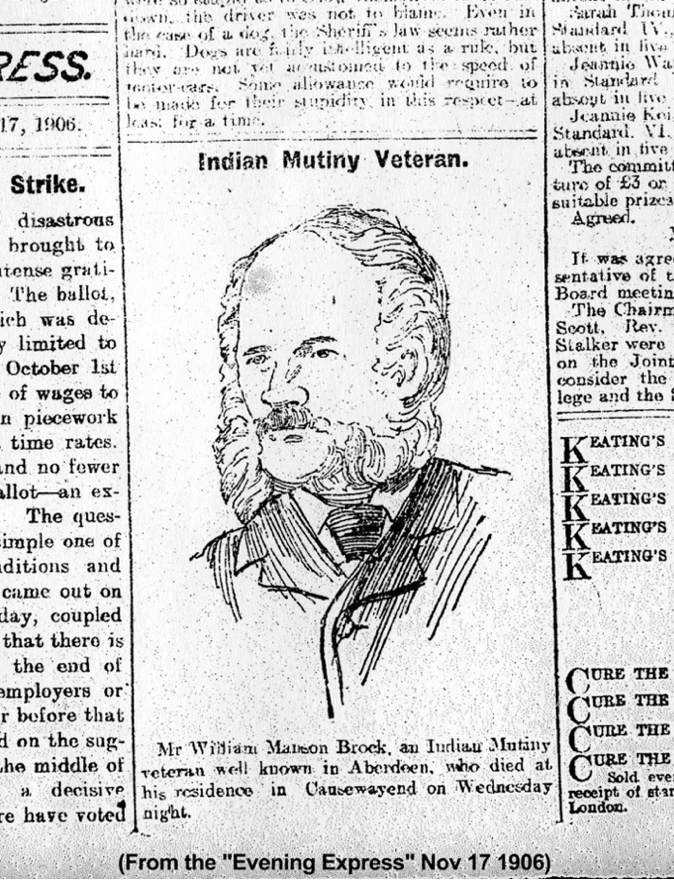
Edward Speke [1830-1881, while serving in the 1st Bengal Fusiliers, carried badly injured Private William Manson Brock off the battlefield and thereby increasing the likelihood of William's survival. In fact, our correspondent reveals how, Private William Manson Brock after amputation of his lower leg below the knee, returned to his native Scotland and lived a full life, wooden leg and all.
Aged 16, William Manson Brock had enlisted in the Honourable East Indian Company, attached to 1st Bengal Fusiliers. Seeing action in the 1853 Burmese War and the siege of Delhi in 1857. In the interim, at one point, suffering sickness, he and a fellow soldier, Corporal Williams, were left behind, detached from their regiment. Striving to catch up with their regiment, they embarked on a perilous cross country journey, walking by night, sleeping hidden in sugar plantations by day. By chance they overheard a Sepoy plotting an attack on a British Convoy encampment. At great peril, they were able to warn of the proposed attack. Shortly after both re-joined their regiment at Delhi. Edward Speke too, with his regiment having marched from Dinapore.
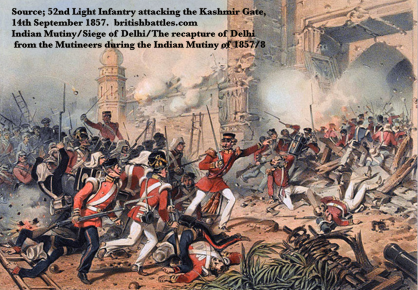
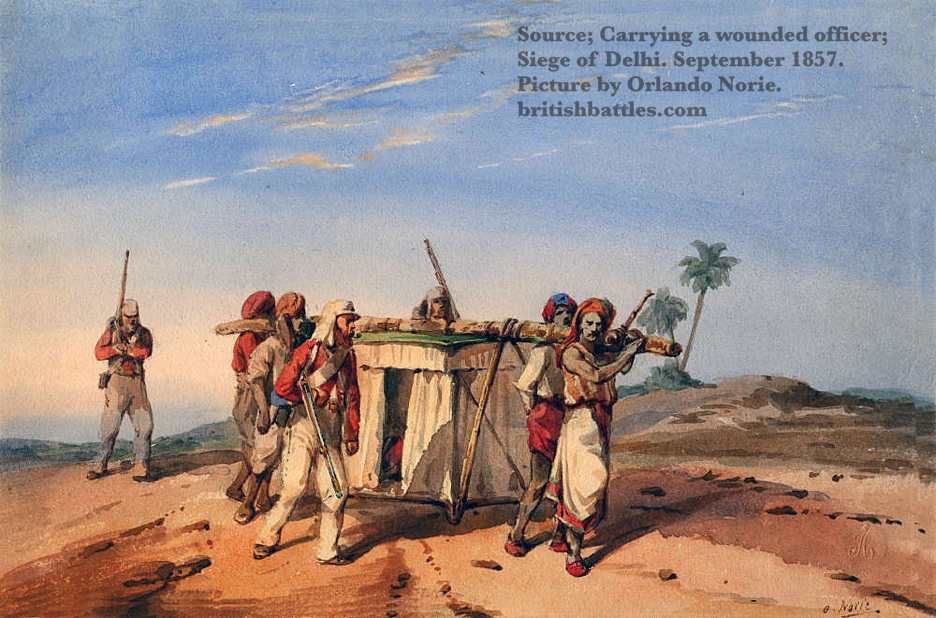
September of 1857, Edward Speke and a fellow [native] soldier were instrumental in saving the life of William Manson Brock. For two days and nights, heavy fighting at Cashmere Gate saw some 2000 British and a similar number of Indian troops eventually storm Delhi by force. Sometime during this battle, William Manson Brock had his foot shot off! Help from a native soldier, name unknown, who took of his turban and stemmed the blood. Then Edward Speke carrying William Manson Brock from the battlefield.
The Morning Post of 1858 concludes the happenings of William Manson Brock; 'Having a surgeon take of his lower leg beneath the knee'. Apparently after this surgery, William saying;
‘Ah, Doctor, if I die, tell Captain Speke how much I feel his kindness’.
Our correspondent, Steven Edwards, is a descendant of William Manson Brock, allowing us to explore Edwards Speke's character, like a 'ring of metal and made of Sterling Stuff'.
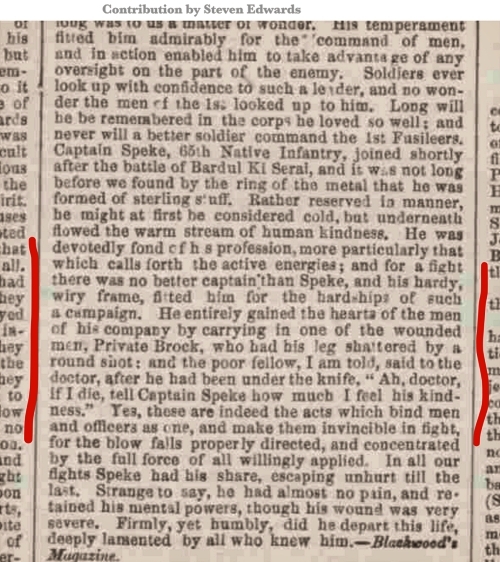
'Rather reserved in manner, he might at first be considered cold, but underneath flowed a warm stream of human kindness. He was devotedly fond of his profession, more particularly that which calls forth the active energies; and for a fight a no better captain than Speke, and his hardy wiry frame fitted him for the hardships of such a campaign.
He entirely gained the hearts of the men of his company by carrying in one of the wounded men, Private Brock, who had his leg shattered by a round shot’.
It's worth noting that Edwards' brother, John Hanning Speke, was at this time travelling from Zanzibar on route to Lake Tanganyika. Meanwhile, Brother Benjamin back home, having been presented by the Bishop of Bath & Wells, the role of clergyman to the rectory of Dowlish Wake & West Dowlish. Oldest brother, William Arthur, busy holding and attending Quarter Sessions as a Somerset Justice of the Peace, JP.
It's worth noting as well, that at this time, the world was shrinking somewhat, with the new method of sending and receiving all manner of news around the world. 'A dawn of communication', with India laying 3,500 telegraph lines. It was said that the Telegraph service allowed the British to mobilise troops quickly and quell the mutineers of 1857.
Other research helps visualise the scene, two officers both mortally wounded, both loved by their men. Alongside Edward Speke was Major Jacob, sharing battlefield and newspaper paragraph. 'The Well's Journal', 1858. 'Major Jacob, riding as he did at the head of his men on a white horse, how he escaped as long as he did is a wonder’. Both serving in Column No 1, the plan to storm the Delhi walls at daybreak on the 14th of September.
Major Jacob, commander of 1st Bengal Fusiliers, known for his exceeding coolness in action;
'Wounded, told his men to leave him and press the attack'. By the end of day on the 14th of September, Lieutenant Edward Speke had been severely wounded.
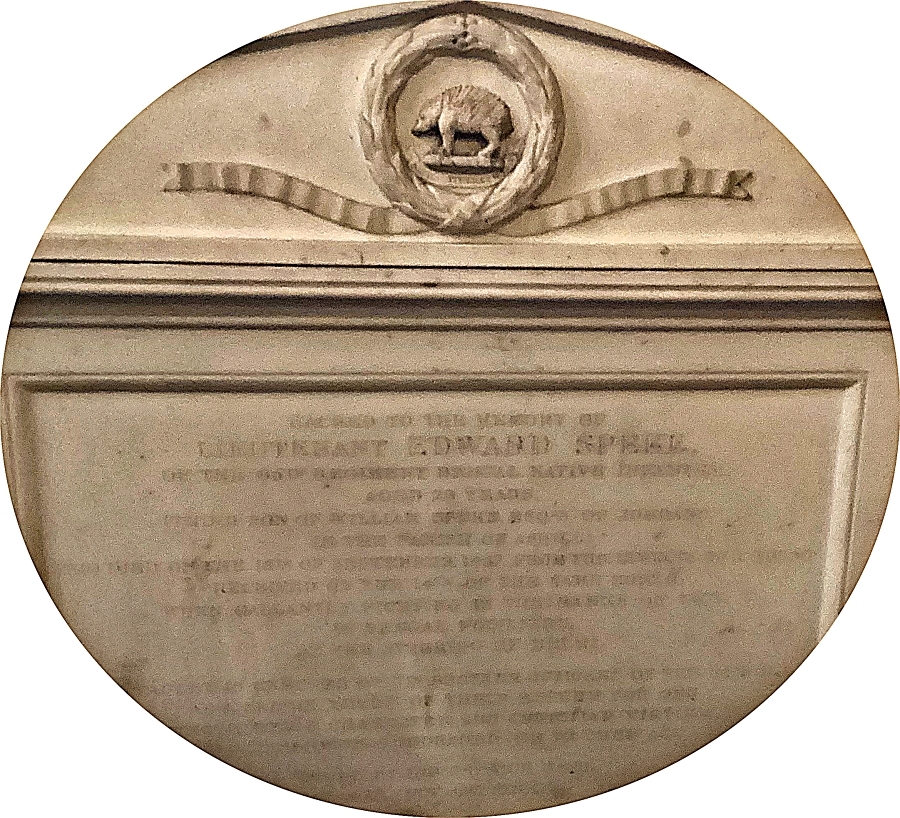
It’s a great pity we know so little about Edward Speke, however the text on the engraved marble tablet installed in St Andrews Church, show human kindness.
“Sacred to the memory of Lieutenant Edward Speke, of the 65th Regiment of Bengal Native Infantry, aged 29 years, third son of William Speke of Jordans, in the parish of Ashill, who died on the 18th of September 1857, from the effects of a wound received on the 14th of the same month, when gallantly fighting in the ranks of the Bengal Fusiliers at the storming of Delhi.
This tablet was erected by his brother officers of the 65th N. I. as a slight token of their esteem for one whose noble character and Christian values, had deservedly endeared him to them all”.
Notes & Sources;
Many thanks to correspondent Steven Edwards.
Lieutenant and Captain are interchangeable in various newspaper records.
List of Officers Killed, The Punjab & Delhi in 1957. books,google.co.uk
Indian Mutiny 1857-9. glosters.tripod.com
Britishbattles.com
Telegraph and the Mutiny, heritagetimes.com
The Wells Journal, page 4, the 9th of January, 1858
The North Star and Farmers Chronicle, the 22nd of November, 1906.
The Leeds Mercury. The 29th of October, 1957.
The Morning Post. The 4th of January. 1857
Temporary photo of tablet below that can be seen in St Andrews church.
Apologies for the unreadable wording on the Marble Tablet.